

2018 — 2019 | Case Study / Bethesda Softworks · Sparkypants Studios
The Elder Scrolls: Legends
Bethesda Softworks + Sparkypants Studios
STUDIOS
Lead UI Designer
ROLE
PC, Tablet + Mobile
PLATFORMS
01 | THE WORK
Lead UI on a full rebuild of a shipped, live card game.
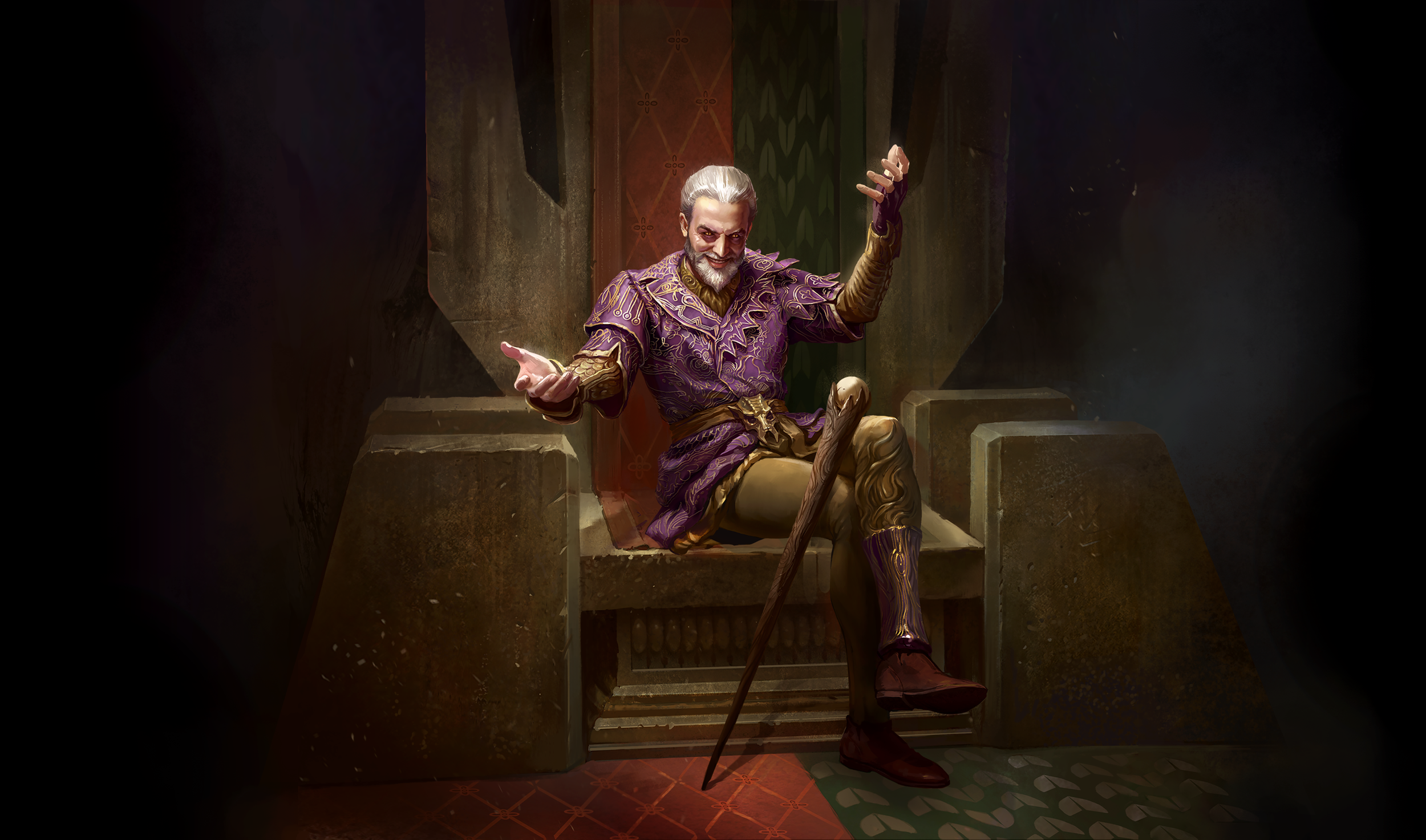
From 2018 through 2019, I was Lead UI Designer at Sparkypants Studios when the studio took over The Elder Scrolls: Legends and rebuilt the entire client on Unity.
My role was the full player-facing UI across PC, tablet, and mobile. Every screen, every flow, and every interaction got redesigned for the new tech, all while the game stayed live for its existing community.
The Challenge
The development window for the rebuild was tight, which meant the design system had to do as much work as possible with as few unique decisions as possible.
02 | THE ASK
Inheriting a shipped, live game is a different design problem than starting one from scratch. The community had years of muscle memory, expectations about how the game looked and felt, and patterns they relied on without thinking about them. The engine change opened the door to better visuals, better motion, and better cross-platform parity.
The job was to bring the interface forward into the new client without losing the language players had already learned.
New foundation, same players.
03 | THE CHALLENGE
Three platforms, one coherent experience, on a tight clock.
Legends shipped on PC, tablet, and mobile, and each platform asked the UI a different question. PC users had screen real estate and pointer precision. Tablet users had touch input but kept the larger canvas. Mobile users had neither. The challenge was a single visual and interaction language that felt native on each platform without three sets of design decisions diverging into three different games.
The development window for the rebuild was tight, which meant the design system had to do as much work as possible with as few unique decisions as possible. A card game lives or dies on the readability of its cards. That was the hill I picked.
04 | WHAT WE SHIPPED
A redesigned player surface, end to end.
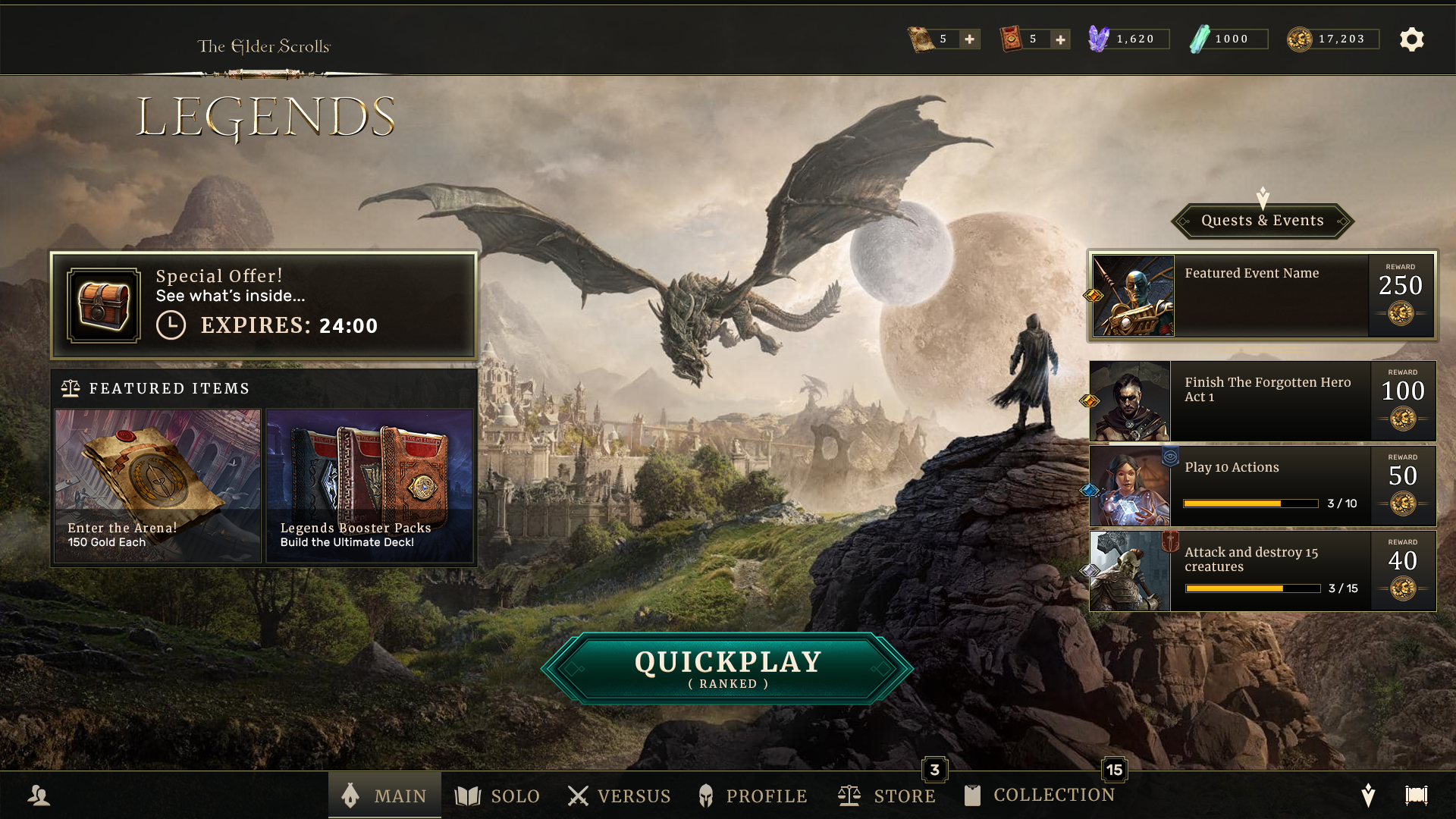
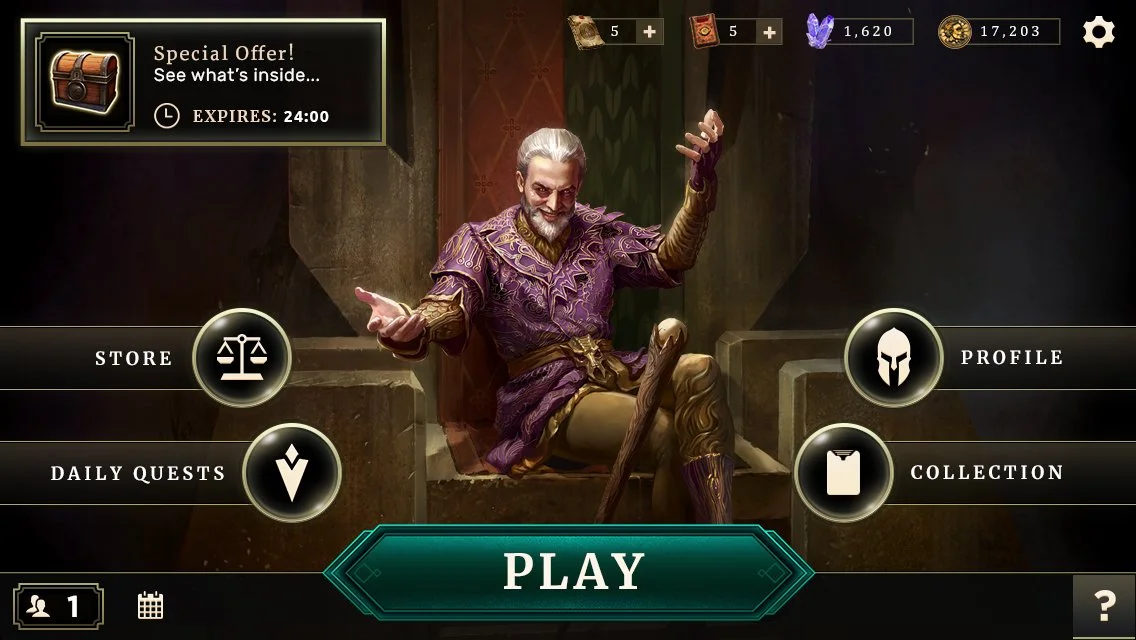
The work covered the full UI surface area of the game. The main menu shell, deck builder, collection, store, match flow, card play, end-of-match, and all the social and progression systems that wrap a competitive card game.
I worked closely with engineering on Unity's UI capabilities, with art on the visual direction, with design on the core interaction patterns. The deliverables ran from research and wireframes through high-fidelity mockups and into in-engine implementation, on the same tight cadence that defined the rest of the project.
05 | PLAY FLOW
A responsive cross-platform experience
The primary goal with the development in the new engine was to rebuild it to be responsive for a various range of devices and allow for a better response to adjust gameplay balance and bugs.
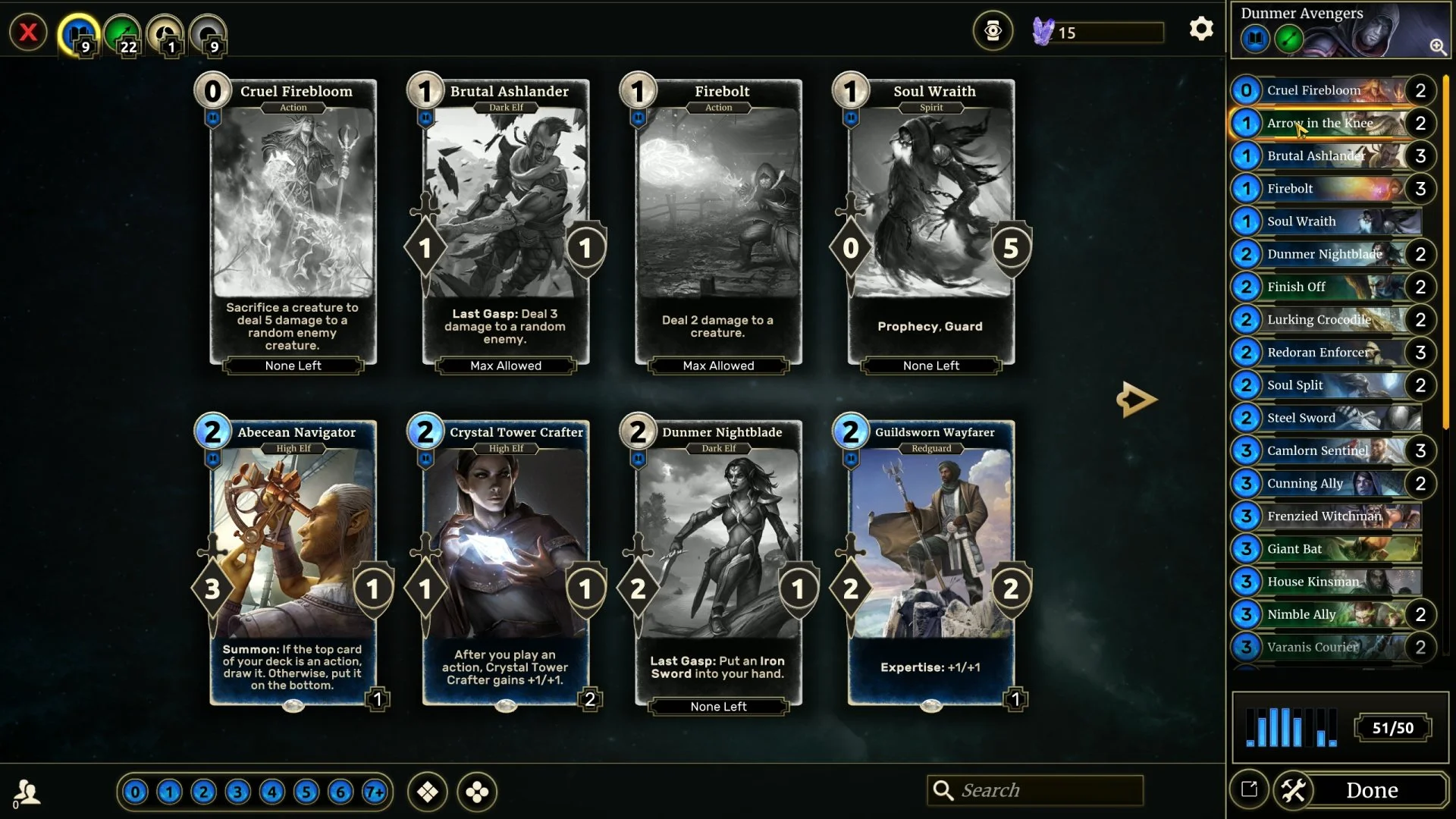
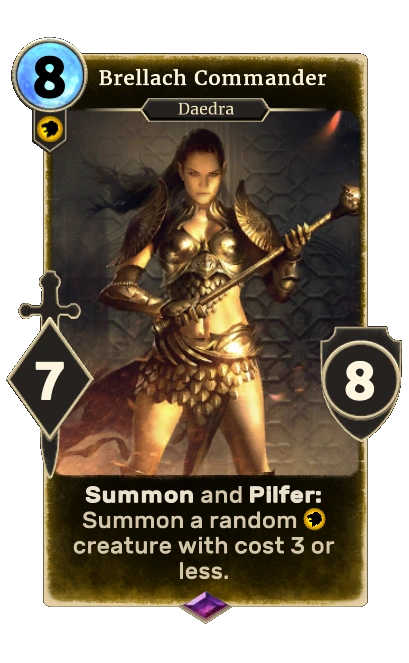

“Old client was so stylish and unique. The absolutely unique, ancient-rusty-scroll visual style is forever gone, and that was another reason to choose this game among hundreds of card games.”
Attribution: r/elderscrollslegends, September 2018
06 | THE PUBLIC RESPONSE
What I learned the hard way
When the new client launched, the response from the existing community was direct and unsparing. Players felt the new interface had lost what made the original feel like a Bethesda card game. They were specific about it, and they were right.
2017 - 2018 | DIRE WOLF DIGITAL
The Before
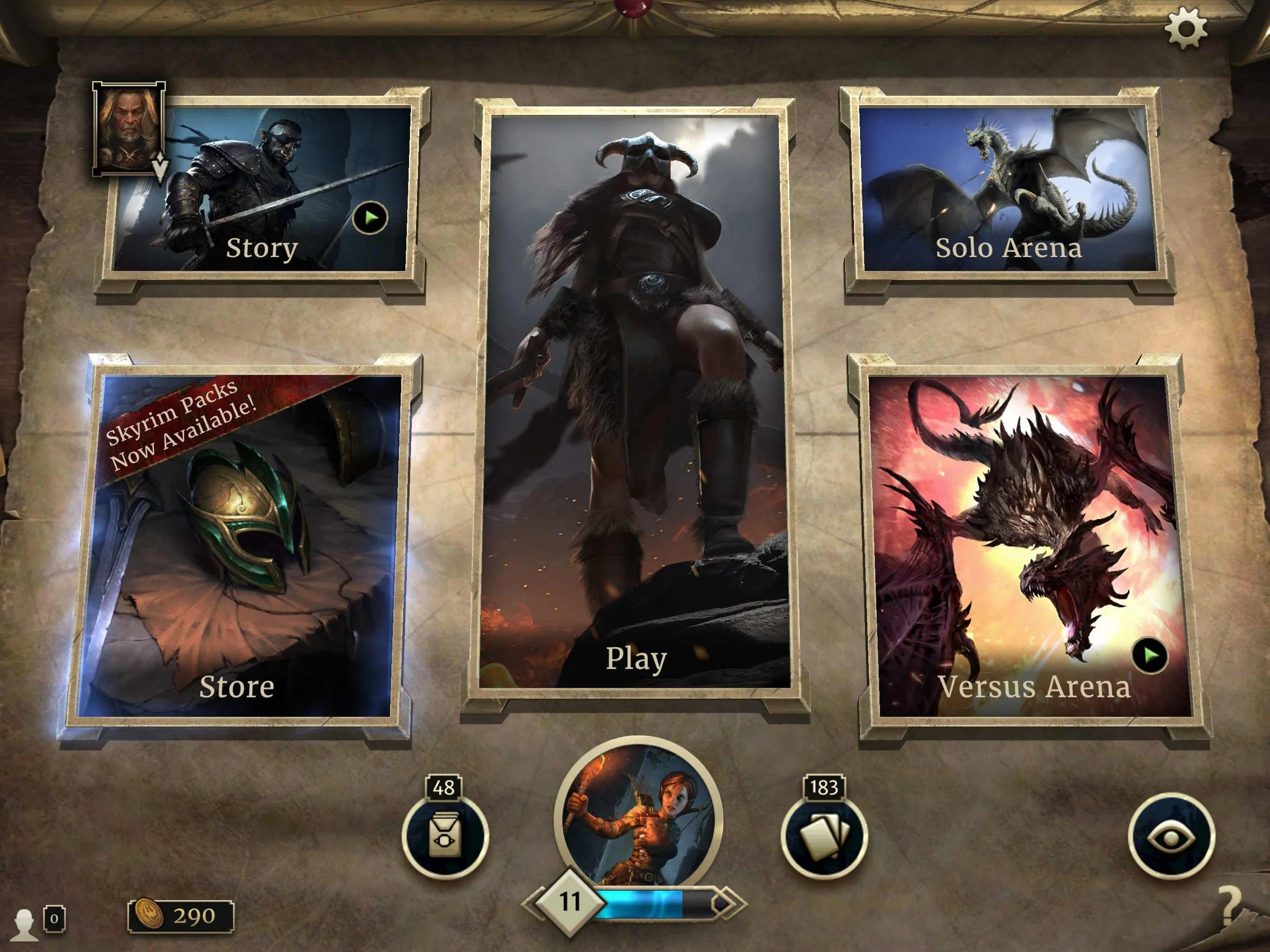
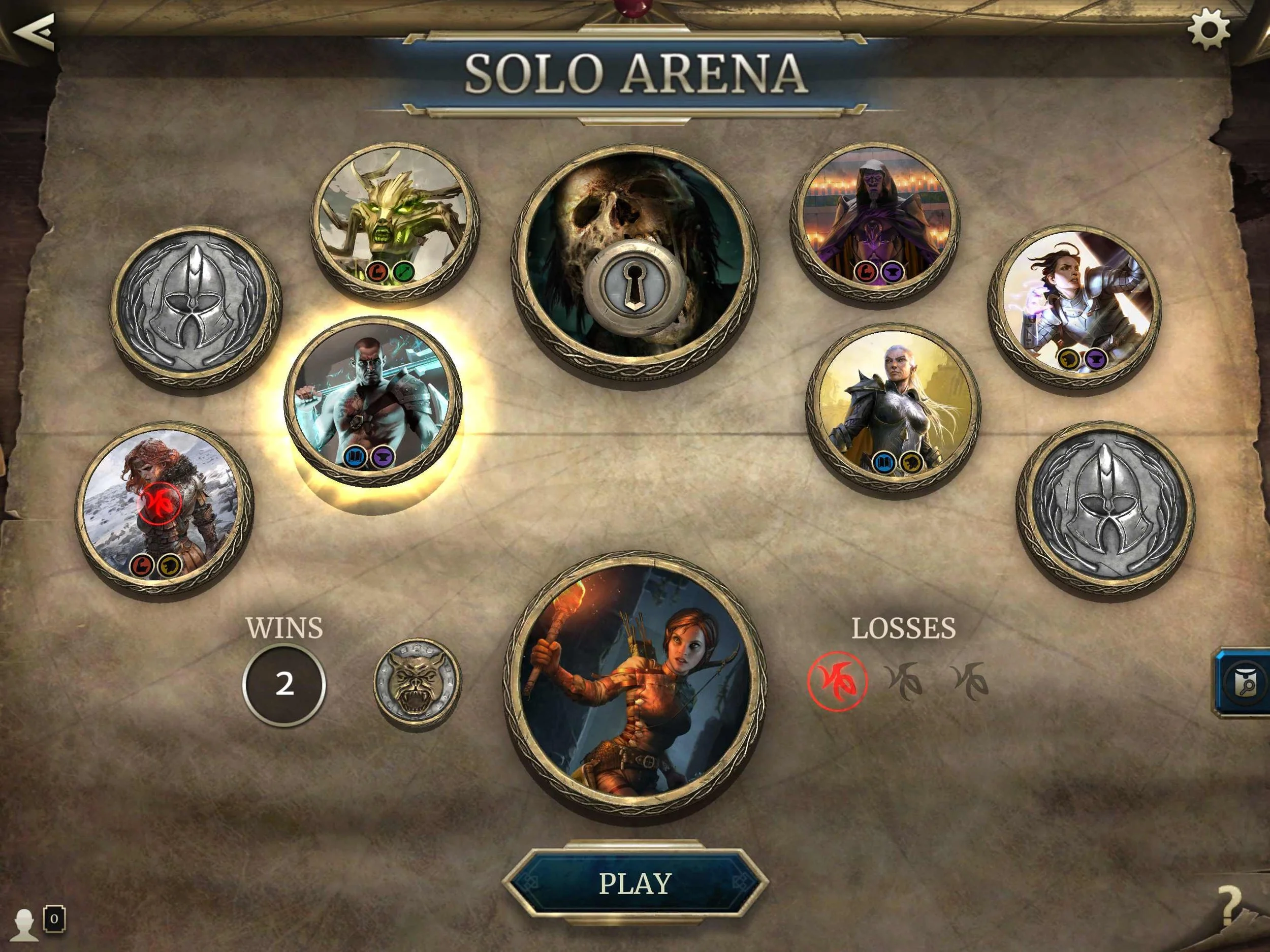
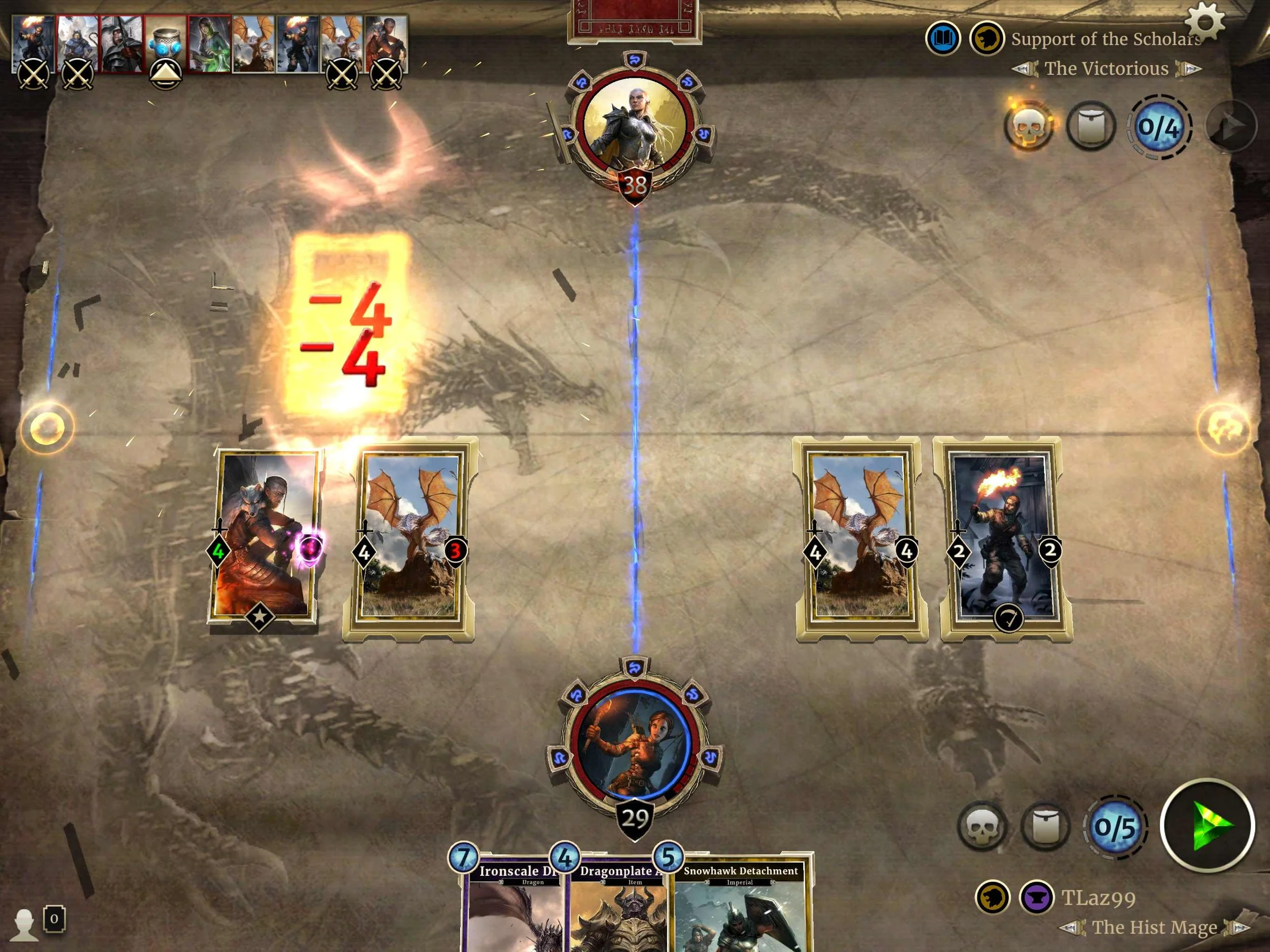
The previous client was all experienced through the antique scroll. The UI was deeply immersive and had that true Elder Scrolls charm, but it wasn’t scalable for the planned expansion for beyond PC to mobile and consoles.
07 | WHAT IT TAUGHT ME
Designing for a community is different from designing with one.
The compression of the timeline had pushed the team toward what we thought was a clean modernization.
What we underweighted was what the existing visual language already meant to the people who showed up to play.
The new client was technically defensible. It wasn't emotionally defensible to the community that already loved the old one. Distance from players had cost us a kind of fluency in how they actually felt about the game we were rebuilding for them.
08 | THE PRACTICE THAT GREW OUT OF IT
Why I Started Flint Collective
A year after Legends, I started a parallel practice working directly with streamers and content creators in competitive and casual games.
What started as design work for individual creators turned into something more useful: a sustained, ongoing window into how players actually talk about the games they love, what they notice in interfaces, what they tolerate, and what they don't.
600+ creators later, that practice has become one of the most important inputs to how I think about player-facing UI now.
The Legends work taught me something I didn't know I needed to learn: the player relationship is part of the design surface, and you can't sketch your way to understanding it.
08 | A NOTE ON THE WORK
The project that changed how I work
Most of my case studies are projects that landed. This one didn't, at least not the way the team wanted it to. I keep it in the portfolio because it's the project that taught me the most, and because the practice it pushed me toward has shaped every UI engagement I've taken on since.
Failure that changes how you work is more valuable than success that doesn't.